
Does Your Birth Number Reveal Your Favourable Direction?
Everyone talks about “lucky” directions—but are they lucky for you? We have all heard such things at some point. And that is why many people pay close attention to directions when choosing a home, an office, or even their work desk. But this brings us to an important thought. If a particular direction is truly lucky, why doesn’t everyone benefit from it to the same extent? Why do two people working in the same building experience different levels of growth? Why, while sitting in the same type of office, does one person attract opportunities while another continues to struggle? Perhaps because it is not just about the direction, it is about the person interacting with the energy of that direction. Your Birth Date Might Know More About You Than You Think We all view our birth date merely as a date. However, from the perspective of Numerology, it is not just a date; it is considered a reflection of your personal vibration. Every person is different. And others are more drawn to creativity and innovation. These differences are not limited to personality alone. They can also influence the kind of environments in which we feel most comfortable and productive. Directions Have Their Own Personalities Just as every individual has a unique personality, Vastu attributes specific qualities to each direction. Directions carry more meanings than points on a compass. Each direction represents a specific type of energy. Now, consider this: if your date of birth reflects your personal energy and directions possess their own energies, could there be a connection between the two? The Same Direction Does Not Yield the Same Result for Everyone Imagine two people working in North-facing offices. They belong to the same industry. Their working hours are roughly the same. Yet, after a few years, one person’s business grows significantly, while the other’s remains stagnant. But could the person receiving energy from that direction also be part of the process? This is where the connection between Numerology and Vastu becomes fascinating. Because while the environment may be identical, the people interacting with it are not. The Connection Between Space and the Individual Let’s consider a simple example. Suppose two people join the same gym. Yet, after a few months, one person seems to undergo this kind of amazing transformation, and the other’s results are mostly average. Both of them were exposed to the same environment, no difference. In much the same way, a single space does not impact every person in the same manner. This is because every individual brings their own unique vibration. Perhaps this is why some people feel instantly comfortable in a particular environment, while others do not. Is the same direction lucky for everyone? We often ask: Because the energy that supports one person may not necessarily support another to the same extent. That is why NumeroVastu emphasizes personalized understanding rather than offering universal answers. The focus is not merely on the direction itself, but on the alignment between the direction and the individual. Why Do Certain Spaces Instantly Feel Right? Have you ever walked into a room and felt great for no apparent reason? Or have they been somewhere and experienced a strange sense of unease? We often overlook these feelings. However, it could be due to a combination of the environment and your personal energy. When a space resonates well with your natural vibration, you may feel more focused, productive, or comfortable there. This Is Where Vastu and Numerology Come Together Vastu reveals the energy of a space. Numerology tells us about the energy we carry with us. And NumeroVastu seeks to bridge the two because sometimes, the question isn’t whether a space is inherently good or bad. The real question is whether that space is suitable for *you*. So, Can Your Birth Date Reveal Which Directions Support You? From the perspective of NumeroVastu, the answer could be—yes, to some extent. Your birth date can offer clues about your natural tendencies and energetic preferences. And by understanding the qualities associated with different directions, you can explore which energies best align with your goals and personality. Final Thought The next time you label a direction as lucky or unlucky, consider this: Is that direction truly lucky for everyone? Or could its compatibility vary from person to person? And perhaps the connection between your birth date and the directions holds the missing clue that could give your journey a fresh perspective.
These 7 Objects May Be Creating a Feeling of Stagnation
Have you ever noticed that, despite everything being fine, progress in your life seems to have stalled? You are putting in the effort and making plans, yet the results aren’t matching your expectations. People often look for the cause of this stagnation externally—blaming the market, luck, other people, or circumstances. But what if the reason lies right inside your home? According to Vastu, certain objects do more than just take up space; they subconsciously influence our energy and mindset. Today, we will discuss seven such items that can create a sense of stagnation in your living space. So, be sure to watch the video until the end—one of these objects might just be present in your home as well. Object 1: Broken Clocks The first item is stopped or broken clocks.A clock does not merely tell time; it is also considered a symbol of movement and continuity. When a clock in the house has stopped, every glance at it sends a signal to the subconscious mind—that something has come to a halt. You may not have consciously noticed this, but our environment communicates with us without words. If a clock isn’t working, replace its battery or remove it entirely. An active clock serves as a reminder of progress and momentum. Object 2: Dead or Dry Plants The second item is dried-up or dead plants. Plants symbolize growth, freshness, and life; this is why greenery is encouraged in homes and offices. However, when a plant withers and remains in a corner for months, it transforms from a symbol of growth into a symbol of neglect. Every time you look at it, your subconscious mind receives a message that something was left uncared for and gradually perished. If a plant is not healthy, replacing it can be far more beneficial. Object 3: Unused and Broken Electronics The third item consists of old or broken electronics. This includes old phones, faulty chargers, defective gadgets, or electronic items that have been sitting in the storeroom for years. These objects often accumulate under the pretext that they “might come in handy someday.” The problem is that they create clutter. And clutter isn’t just physical; it is mental as well. The more unnecessary items occupying your space, the harder it becomes to maintain clarity and focus. That is why decluttering periodically is essential. It is better to respectfully part ways with items that are neither in use nor repairable. Object 4: Torn or Damaged Decorative Items The fourth item includes broken showpieces, cracked mirrors, or damaged décor items. Many people hold on to these because of emotional attachment. However, every object in your home conveys a visual message. Constantly seeing damaged items can create a sense of incompleteness in your environment, rather than a feeling of wholeness or excellence. This doesn’t mean you should get rid of everything old, but you should certainly address items that are visibly damaged and beyond repair. Object 5: Piles of Unopened Papers The fifth item consists of piles of old bills, documents, and unopened papers. There is often a corner in the house where documents tend to accumulate. These aren’t just papers; they become visual reminders of pending decisions and unfinished tasks. Every time we look at them, our subconscious mind is reminded that there is still work left to be done. Therefore, organizing documents, discarding unnecessary papers, and properly arranging important files can be very helpful. Object 6: Empty Containers and Boxes The sixth item includes a large number of empty containers, cartons, and boxes. Having one or two boxes is normal. However, when an entire storage area or room fills up with empty cartons, it can become a symbol of wasted potential. These items occupy valuable space without serving any practical purpose. Space has a psychological impact; when a space is open and organized, the mind also feels more open and productive. Therefore, you might consider getting rid of any cartons and containers that aren’t truly necessary. Object 7: Objects Associated with Negative Memories And then there’s the seventh, actually the most crucial group: items that bring back unpleasant memories, or signal old past failures These could be gifts, specific items, or anything that instantly dampens your mood when you look at them. The item itself isn’t “bad” by nature, but the recollection that sticks to it, that’s what kicks your emotions into gear. If an item repeatedly reminds you of disappointment, stress, or regret, its presence can affect your emotional environment. It is crucial to identify such objects and make a conscious decision regarding them. Conclusion You see, stagnation isn’t merely a Vastu issue; it is often a combination of mindset, habits, and environment. However, our environment certainly influences our way of thinking. Stopped clocks, withered plants, cracked electronics, damaged décor, paper stacks, empty cartons, and stuff tied to unkind memories, all that can slowly build a mood where the feeling of moving forward just kind of slips away. Conduct a quick audit of your home today. Check to see which of these items are present in your space. You might find that you experience a sense of freshness and renewed momentum—not just in your home, but in your mindset as well.
10 Vastu Objects That Are Considered Auspicious
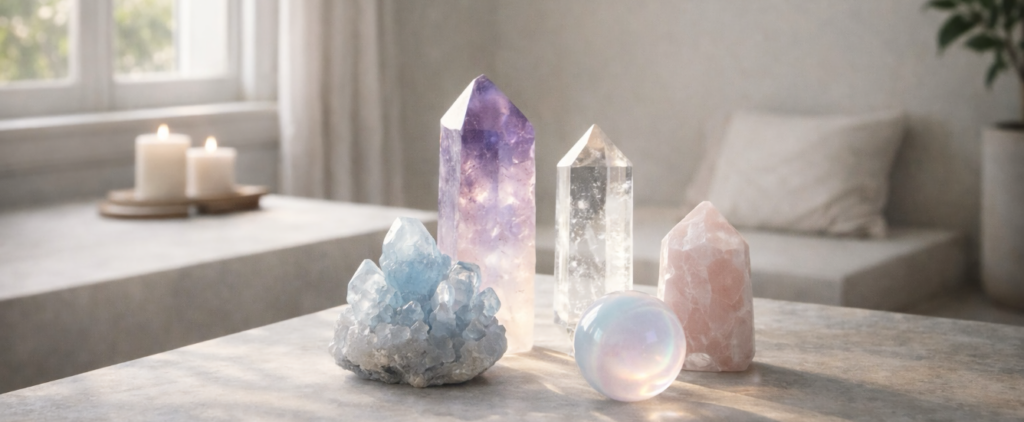
These days, if you visit a home, office, or shop, you are bound to come across certain common Vastu objects. You might see a Swastik symbol at the entrance, a bamboo plant, or a pyramid or crystal object on a desk. However, the interesting thing is that while most people see these objects daily, they are often unaware of their meaning. Are they merely for decoration, or do they hold a deeper significance? Vastu is not just about directions and spatial arrangements; symbolism is also a crucial aspect. Certain objects serve as reminders of positivity, discipline, growth, and balance. This is why these Vastu objects have been a part of people’s homes and workplaces for years. So, today we will discuss 10 popular Vastu objects and understand why people attach so much importance to them. 1. Vastu Pyramid Let’s begin with the Vastu Pyramid. The pyramid is considered one of the most fascinating structures in the world. Due to this unique shape, the pyramid is regarded as a symbol of stability, focus, and concentration. The use of pyramids in Vastu gained popularity because their geometry is considered a balanced structure. Many people place them in study rooms, on office desks, or in various areas of their homes. From a psychological perspective, the pyramid shape symbolizes focus and direction— just as having a vision is necessary for continuous improvement and greater success. For this reason, the pyramid is often seen as a symbol of ambition, growth, and progress 2. Wind Chime Now, let’s discuss wind chimes. Just imagine how peaceful the atmosphere feels when a gentle breeze blows, and you hear the soft sound of a wind chime. In Vastu, sound symbolizes flow and energy within our space. When energy in a space feels stagnant, it naturally leads to a sense of boredom and heaviness. The gentle sound of a wind chime makes the environment feel lively and active. That is why wind chimes are considered symbols of positivity and freshness. However, remember that the purpose of a wind chime goes beyond just the sound it produces. It serves as a reminder that movement and change are essential in life. Where movement ceases, growth slows down. 3. Black Tourmaline Now, let’s look at a Vastu object that is gaining significant popularity these days—Black Tourmaline. Black Tourmaline is a natural crystal stone regarded as a symbol of protection and grounding. In today’s world, we all live amidst stress, negativity, and information overload. Between social media, workplace pressures, and personal responsibilities, we often find ourselves mentally exhausted. It is in this context that people prefer keeping Black Tourmaline in their workspaces or homes. Many believe it serves as a symbolic tool for absorbing negative vibes and keeping the mind grounded. Whether or not you subscribe to beliefs regarding crystals, one thing is clear: when we view an object as a symbol of protection and stability, it can make us feel mentally stronger. For this reason, Black Tourmaline holds a special place on the list of modern Vastu objects. 4. Laughing Buddha Now, about the Laughing Buddha. You may have noticed that the most distinctive feature of the Laughing Buddha is his smile; perhaps that is precisely why he is so popular. In today’s fast-paced world, people chase success so relentlessly that they often forget about happiness. The Laughing Buddha teaches us a simple lesson: while wealth is important, happiness is even more so. His cheerful appearance is considered a symbol of positivity, abundance, and contentment. That is why many people keep one in their homes and offices to create a light and welcoming atmosphere. 5. Lucky Bamboo Plant Now, let’s discuss the Lucky Bamboo plant. If you observe bamboo closely, you will notice that it is incredibly flexible. Whether faced with strong winds, heavy rain, or changing weather, bamboo adapts effortlessly. This very quality makes it a symbol of growth and adaptability. In both life and business, success comes to those who know how to adapt to changing situations; the bamboo plant reminds us of this very lesson. Moreover, green plants naturally make any space feel fresh and vibrant. That is why the bamboo plant is regarded as a symbol of positivity and growth. 6. Crystal Ball The next object is the Crystal Ball. The most distinctive feature of a crystal is its transparency. When light strikes a crystal, it reflects and disperses. For this reason, the crystal is viewed as a symbol of clarity and clear thinking. Whether in business, career, or personal life, confusion often leads to poor decision-making. The crystal ball reminds us that growth becomes difficult without clarity. Many people keep one on their study or office desks, embracing this symbolic meaning. 7. Elephant Statue The elephant has long been a significant symbol in Indian culture and traditions. It is regarded as an emblem of strength, wisdom, and leadership. If one looks at the hierarchy of the wild, the elephant is known for its intelligence and calm demeanor; it possesses great power without resorting to unnecessary aggression. Consequently, the elephant statue is considered a symbol of authority, confidence, and stability. Many business owners and professionals keep elephant figurines in their offices to represent these qualities. 8. Kamdhenu Cow Kamdhenu is revered in India’s ancient traditions. She is regarded as a symbol of abundance, nourishment, and blessings. However, in practical terms, Kamdhenu teaches us the importance of gratitude. Everyone desires growth today, yet without gratitude, growth never feels truly fulfilling. For this reason, the symbolism of Kamdhenu extends beyond mere prosperity; it is also deeply connected to blessings and contentment. 9. Swastik Symbol The Swastik is one of India’s oldest and most powerful symbols. The very word “Swastik” signifies “auspiciousness” or “well-being.” For centuries, this symbol has been used when starting new ventures, during festivals, and on auspicious occasions. Drawing the Swastik is a common tradition whenever a new business is launched or an auspicious event takes place at home.
Significance of Nameplate According To Each Direction

The nameplate outside your home is more than just an identification board. According to Vastu, it serves as your home’s first point of identity and its primary energy point. Think about it: what is the first thing people notice when they arrive at your home? The nameplate. And if it is installed with the right orientation, color, and placement, it can help attract positive energy. However, is the same type of nameplate suitable for homes facing any direction? Certainly not. Today, we will explore which types of nameplates are considered auspicious and conducive to positivity based on the direction your home faces. The Importance of Nameplates in Vastu In Vastu, the entrance is considered the “face” of the home. Just as a person’s first impression is formed by their face, the first impression of a home is created by its entrance and nameplate. A nameplate serves as a symbolic invitation that welcomes energy. When a nameplate is clean, clearly visible, and positioned according to proper directional guidelines, it helps create a more balanced environment within the home. Many people spend lakhs of rupees on lavish interiors yet overlook the finer details of the entrance. From a Vastu perspective, however, these very details can sometimes be the most important. Nameplate for a North-Facing Home If your home is North-facing, this direction is traditionally associated with growth, opportunities, and career advancement. A nameplate with a metallic finish is preferred for this direction. Nameplates made of stainless steel, or those featuring silver tones or a metallic finish, harmonize well with the energy of the North. The font should be clear and professional. The name on the plate should be visible enough to be easily read from a distance. Avoid faded lettering or damaged plates, as these create an impression of neglect. If you are a business owner or focused on career growth, a well-maintained metal nameplate at a North-facing entrance is an excellent choice. Nameplates for East-Facing Homes The East is considered the direction of sunrise and new beginnings; it is associated with positivity, recognition, and fresh opportunities. Wooden nameplates are a popular choice for east-facing homes, as the natural wood texture creates a sense of warmth and a welcoming atmosphere. You can opt for golden or dark brown lettering on a wooden base and keep the design simple and elegant. Overly cluttered graphics or excessive decorations can detract from the simplicity of the entrance. Installing the nameplate with proper lighting is also considered beneficial for east-facing homes, as light enhances both visibility and positivity. Nameplates for South-Facing Homes There are many myths surrounding the south direction; however, in Vastu, every direction holds its own significance. For south-facing homes, nameplates made of wood or a combination of wood and metal are suitable choices. Deep brown, maroon, or earthy tones look elegant and lend a commanding appearance to the entrance. The most important factor is that the nameplate should be sturdy and of premium quality. Any broken, chipped, or worn-out nameplate should be replaced, as Vastu places great importance on proper maintenance. A well-maintained entrance always creates an impression of positivity and confidence. Nameplate for a West-Facing Home The West direction is associated with stability and support. Metal or metal-finish nameplates are suitable for this direction. You can choose bronze, brass, or metallic shades, which lend a sophisticated look to the entrance. The size of the nameplate should be proportionate; a nameplate that is too small or too large can disrupt the visual balance. Symmetry should also be considered for west-facing homes. Instead of being placed haphazardly or in an awkward position, the nameplate should be properly aligned. Common Mistakes People Make While choosing a nameplate based on direction is important, there are certain common mistakes that should be avoided regardless of the home’s orientation. The first mistake is keeping a dirty or dusty nameplate. If the nameplate is covered in dust or the lettering is not clearly visible, the overall appearance of the entrance suffers. The second mistake is continuing to use a nameplate with broken corners or cracks. The third mistake is inadequate lighting. If the nameplate is not visible at night, its impact is diminished. And the fourth mistake is displaying nicknames or incomplete names. The nameplate should clearly state the full family name or the owner’s name. Conclusion Finally, remember that good luck doesn’t come solely from direction or materials; it is also linked to cleanliness, maintenance, and positive intentions. Your nameplate serves as the first introduction to your home. When it is thoughtfully chosen based on directional principles, kept clean, and maintained in good condition, the entrance naturally feels more welcoming and balanced. So, if you wish to make a small yet meaningful Vastu upgrade to your home, start with your nameplate. Sometimes, major changes begin with a tiny detail.
Vastu Insight To The Direction Of Growth

Have you ever noticed? Some people start with a small shop, and gradually, their business expands. Some begin their journey from an ordinary home and witness remarkable growth in their lives within just a few years. And then, there are those who work incredibly hard, possess talent, and even get opportunities, yet their growth seems to stall or move in fits and starts. So, the question is, is growth merely the result of hard work and luck? Or do the directions of your space also play a silent role in this journey? According to Vastu, there is a specific direction associated with progress, expansion, and opportunities. Today, we will discuss which direction is linked to rapid growth and what the Vastu perspective says about it. Introduction to the Direction of Growth In Vastu Shastra, every direction represents a specific type of energy. For instance: However, when it comes to growth, expansion, and attracting new opportunities, the East is considered a highly significant direction in Vastu. The sun rises from the east direction. Since ancient times, the sun has been regarded as a symbol of energy, leadership, confidence, and new beginnings. For this reason, the East is also known as the growth-oriented direction. However, this does not mean that growth will automatically begin simply by sitting in the East. Growth occurs when your efforts and your environment complement and support each other. Why is the East linked to growth? Think about it, every morning, the sun’s first rays arrive from the East. Nature itself conveys the message that every day offers a chance for a fresh start. According to Vastu, the East represents the energy of progress and possibilities. That is why, traditionally, many offices, educational spaces, and key activity zones were designed with an orientation towards the East. If the East is balanced and open, Vastu principles suggest that the flow of positivity and movement within the space is enhanced. And movement is the primary prerequisite for growth. After all, where there is stagnation, expansion becomes difficult. Whether you are a homemaker, an entrepreneur, or a shop owner, the meaning of growth can vary for everyone. And the East is viewed as a symbolic gateway to these new opportunities. Signs That May Lead to Stagnation Let’s consider an interesting point: Vastu is not just about directions; it is about the flow of energy. People often say things like: In such situations, Vastu experts often check whether the East direction is excessively blocked. For instance: From a Vastu perspective, when growth-related zones become heavily burdened, the energy of progress is considered restricted on a symbolic level. That is why cleanliness, openness, and organization are given great importance. Practical Applications for Homes and Businesses Now, let’s understand the practical side of it? The first thing is to keep the East zone clean and clutter-free. If it is a home, ensure this area isn’t unnecessarily overloaded. If it is an office or shop, keep the entrance and pathways organized. The second thing is to prioritize natural light. Sunlight is considered a symbol of positivity and activation. The third thing is to consciously engage in growth-oriented activities. For instance, choose well-balanced spaces for planning, goal setting, brainstorming, or important discussions. There is another interesting point for business owners. Growth isn’t just about increasing the customer base. Growth means better systems, a stronger team, an improved reputation, and long-term sustainability. And that is precisely the objective of Vastu—to organize the space in a way that supports your goals. For homemakers, growth may be reflected in family well-being, thriving children, and a positive atmosphere at home. That is why Vastu holds a unique relevance for every individual. Conclusion So, if someone asks, “Which direction is considered to be linked to rapid growth?” From a Vastu perspective, the East is regarded as the direction of growth, progress, and new opportunities. But remember, Direction is merely a support system. True growth stems from a combination of vision, action, consistency, and the right environment. The purpose of Vastu is not to create magic. Its purpose is to align your space with your goals. And when your efforts and your environment work in the same direction. Growth ceases to be just a possibility. It begins to unfold as a natural process. Therefore, if you wish to invite growth into your life, home, or business, do not focus solely on your goals; pay attention to the space where you begin your daily journey toward achieving them. Sometimes, the secret to growth lies not just in your actions, but also in the environment that supports you every day.
Business and its vastu connection: Insights successful business owners consider

Have you ever noticed? Some businesses, despite putting in immense effort, fail to grow beyond a certain level—whereas others continue to expand relentlessly, opening new branches, capturing new markets, and seemingly attracting opportunities that come walking right up to them. Now, the question arises: are strategy, marketing, and investment the only factors responsible for expansion? Or do successful entrepreneurs pay attention to yet another factor—one that ordinary people often tend to overlook? In today’s blog post, you will discover the connection between Business Expansion and Vastu and gain an understanding of the specific elements that many successful entrepreneurs take into consideration during their expansion plans. First of all, let’s clarify one thing: Vastu is neither magic nor a shortcut. For business growth, vision, planning, execution, and consistency are the most critical factors. However, Vastu functions as a supportive framework that helps balance the workplace environment. Just as a healthy plant requires not merely a seed, but also the right soil, water, and sunlight, similarly, a business requires a supportive environment alongside the right systems. For this very reason, when many entrepreneurs plan for expansion, they consider spatial energy and Vastu alignment alongside location, infrastructure, and finances. Let’s explore exactly what these elements are. Point 1: The Energy of Expansion Is Always Associated with the North Direction When it comes to business growth and expansion, the North direction is accorded great importance in Vastu. The North is regarded as the direction of opportunities, networking, cash flow, and business momentum. You will observe that in many growing businesses, the North zone is not unnecessarily obstructed. Yet, what often happens in many offices? Both symbolically and practically, this can restrict movement. Successful entrepreneurs often ensure that the North area of their office remains clean, organized, and active. This is because expansion, by its very definition, implies movement. And when a sense of movement and openness is fostered within the workplace, employees tend to feel more proactive, and the flow of decision-making also improves. Therefore, whenever you plan to expand your business, make it a point to evaluate your North zone. Point 2: Leadership Positioning Directly Influences Business Expansion Expansion is not driven solely by money; it is driven by decisions. And the source of these decisions is leadership. For this very reason, Vastu places great emphasis on the seating position of an entrepreneur or business owner. Many successful business owners carefully select the placement of their cabins and their seating direction. The reason is simple: when you are expanding your business, you require clarity. You need to evaluate new markets, assess risks, inspire your team, and make pivotal decisions. If the leadership space is cluttered, cramped, or disorganized, it can affect the decision-making process psychologically. Therefore, Vastu suggests that the leadership area should be stable, organized, and reflective of authority. Many entrepreneurs specifically review this aspect during periods of expansion, as every significant phase of growth begins with a strong leadership mindset. Point 3: The Connection Between the South-West Zone and Business Stability Everyone loves the excitement of expansion. However, there is a distinction between sustainable expansion and successful expansion. Many businesses grow aggressively, only to begin struggling after a few years. Why? Because maintaining stability alongside growth is equally important. In Vastu, the South-West zone is regarded as the zone of stability, control, and long-term planning. For this very reason, in many business spaces, important records, leadership areas, or critical decision-making zones are situated in the South-West section. If business expansion is being planned, an entrepreneur should not focus solely on new opportunities; rather, they must also pay close attention to the strength of their foundation. Without strong roots, no tree can grow to great heights. And in the context of business, these roots represent stability, systems, and control. Point 4: Why Is Clutter Reduction Essential Before Expansion? An interesting observation has been noted: as businesses grow, an unnecessary accumulation of items often begins to build up within their offices. All of these factors gradually begin to impact workplace efficiency. Whether you view this from the perspective of Vastu or from a management standpoint, clutter invariably slows down workflow and movement. Successful entrepreneurs often prioritize restructuring and decluttering before embarking on an expansion, as it is crucial to create space for new opportunities. If the office environment itself is physically overloaded, it can also have a detrimental impact on the employees’ mindset. Preparing for expansion involves more than just acquiring a new office space; sometimes, the removal of old items constitutes an equally vital part of the growth process. Conclusion So, can a business expand solely through Vastu? Absolutely not. For business expansion, strategy, market understanding, leadership, innovation, and execution are the most critical factors. However, many successful entrepreneurs recognize one additional truth: the environment matters. The energy of the workplace matters. The team’s experience matters. The decision-making environment matters. And for this very reason, they consider Vastu principles as a supporting factor during the expansion planning phase. Ultimately, remember this: “Growth is not merely about opening new branches; growth is about creating an environment where opportunities can naturally flourish.” And perhaps that is why many successful entrepreneurs—alongside analyzing expansion metrics—also pay close attention to their workspace. For when the foundation is aligned, sustaining growth becomes even easier.
Best Direction For Financial Flow According To Vastu
Think, you are starting a new business. Proper planning has been done, branding is set, a team has been hired, but the business is not running. Sales are not really coming in, productivity is sort of down, and the whole work thing feels stalled, like it’s stuck. You change strategies again and again, but the result is the same – stuck. All this is not just a marketing or management issue. Sometimes the problem is in the energy of space. And the most basic principle of Vastu says this – If the direction is wrong, then even the intention becomes weak. So let’s know today – which direction is most suitable for business, what is the role of which zone, and how you can align your office or shop with the right energy. 1️⃣ NORTH DIRECTION – GATEWAY OF FINANCIAL FLOW North is considered the zone of the God of wealth, Kuber in Vastu. This direction is directly linked to money, opportunities, and professional clarity. If your business is dependent on the flow of money – be it trading, consultancy, or daily cash-based work – then the purity and alignment of the North direction matters a lot. Key Principles: Desk Placement Tip: Energy Impact: 2️⃣ EAST DIRECTION – VISIBILITY, GROWTH & NEW IDEAS East direction is associated with Surya Devta in Vastu. This direction activates visibility, growth, inspiration and logical thinking for your business. Best suited for: Startups, educational ventures, media, marketing, and any business that is dependent on public interaction or creative ideas. Key Principles: Workforce Tip: Energy Impact: 3️⃣ WEST DIRECTION – STABILITY, STRUCTURE & EXECUTION The role of the West direction is to give structure and sustainability to your business. This is the zone where work is slow and steady – but with a long-lasting impact. Best suited for: Businesses that are based on long-term deals, contracts, or large-scale execution. Key Principles: Avoid: Energy Impact: 4️⃣ SOUTH DIRECTION – LEADERSHIP, CONTROL & INTENSITY The south direction is quite misunderstood. People associate it with negativity, but in reality, it is an intensely powerful zone – if used correctly. The South is related to fire energy, dominance, and control. Key Principles: Desk Placement Tip: People who take high-pressure or high-stakes decisions on a daily basis should sit in the South-West zone and face North or East. Avoid: Do not use a South-facing entry gate without Vastu correction – it tends to drain energy, and aggressive decisions can be taken. Energy Impact: If the South direction is properly aligned, the business gets a solid command position. It gets an edge in competition, and decision-making becomes sharp. BONUS – SEATING LOGIC FOR MAXIMUM PRODUCTIVITY Direction is not just of walls – your positioning is equally important. Owner/Leader: Employees: Avoid: Never make anyone work by making them sit directly in the South-East – it creates irritability and a short attention span. CONCLUSION – SPACE ENERGY = BUSINESS ENERGY No matter how many strategies you shuffle around, if the place isn’t aligned, the results will either get delayed or they will be stalled. Vastu is not superstition – it’s structured space psychology. And direction is not decoration – it’s orientation of intent. If you want your business to grow in a predictable way, start analyzing the directions of your working space. Small changes – like shifting seating positions, correcting the zone of heavy furniture, or keeping the entrance clear – can all reset the energy of your business.