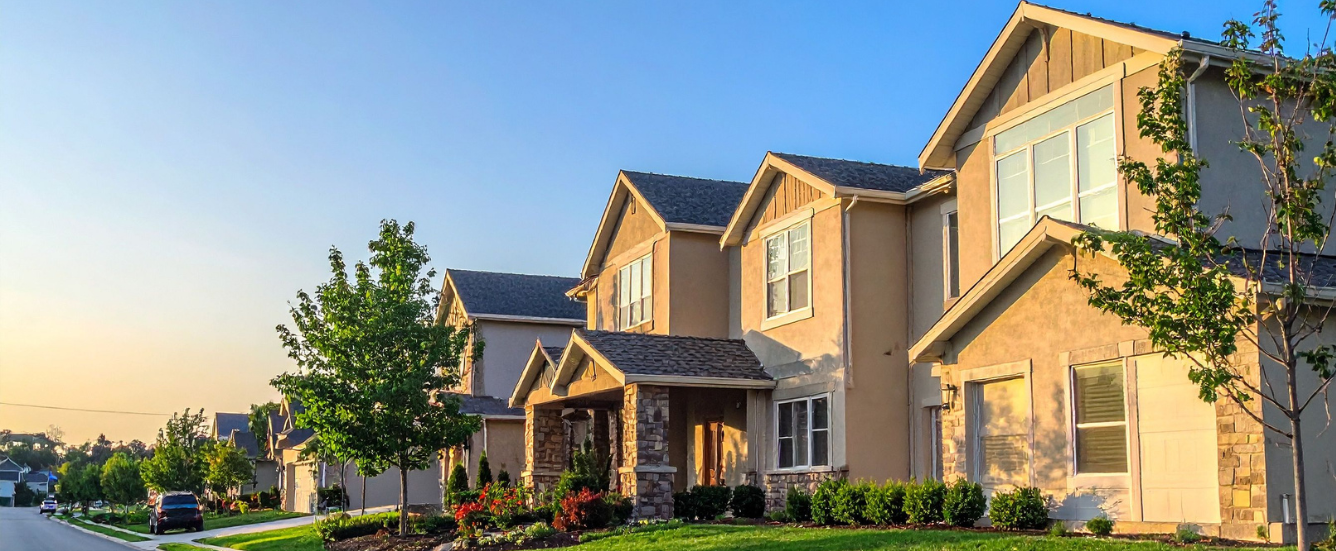

When starting a business, we typically consider three factors: the prominence of the location, the rent, and accessibility for customers.
However, an interesting question arises: is every attractive location equally suitable for every business? Consider two shops in the same market. Both have good visibility and similar rents, yet one business grows consistently while the other repeatedly faces challenges.
From the perspective of Numerovastu, a location is not viewed merely as a physical address. The numbers and directions associated with a location can align with the business’s overall energy pattern. Therefore, when choosing a business location, it is important to look not just for the “best area” in general, but for the “best area for my business and my numbers.”
Step 1: First, Understand the Nature of the Business
The very first rule—identify the nature of the business before choosing a location.
Every business has different requirements.
For instance, a retail store needs high customer footfall and visibility. A consultancy office might require a professional environment, trust, and stability. For a manufacturing unit, operational efficiency, space, and ease of movement might be more important.
Similarly, the same location cannot automatically be considered ideal for both a restaurant and a Chartered Accountant’s office. In other words, the first question shouldn’t be: “Which direction is the luckiest?”
The first question should be: “What type of energy and environment will support my business?”
This is where the Numerovastu approach becomes interesting.
Step 2: The Role of Directions
Now, let’s discuss directions. In Vastu, different directions are associated with specific qualities and functions. Traditionally, the North is linked to opportunities, movement, and financial growth.
The East is considered important in terms of visibility, new beginnings, recognition, and growth-oriented activities. The South is associated with action, intensity, and execution-oriented energy. And the West is linked to aspects of stability, completion, and gains. However, there is an important point to understand here— Directions should not be treated as isolated formulas.
Simply assuming that “it is the North, so the business will succeed” is not enough. A more meaningful approach involves a comprehensive evaluation that considers the entrance, internal layout, surrounding environment, the nature of the business activity, and numerical factors—all together.
Step 3: Look at the Property Number
Now comes the numerology aspect. When considering a commercial property, its property number, shop number, office number, or unit number can also be part of the numerological analysis.
For example, if a property number is 245, numerology allows us to determine its single-digit vibration by adding the digits together:
2 + 4 + 5 = 11
And by further reducing it:
1 + 1 = 2
Thus, the property number can be associated with the vibration of the number 2.
However, simply asking “Is 2 good or bad?” is an incomplete approach. The important question is— “Is this number compatible with the business owner and the nature of the business?”
This is why a property might feel supportive for one person, whereas the same number might not be as suitable for a different business.
Step 4: The Owner’s Number Also Matters
Let’s assume two people are starting the same type of business. Both have the same budget, are in the same city, and have the same type of property. Yet, the same location might not be equally suitable for both of them. Why?
Because there is a person behind the business. In numerology, the owner’s date of birth can be used to analyze their moolank (Root Number) and other relevant numbers. Subsequently, one can assess the compatibility of these with the property number and business requirements.
For instance, if an entrepreneur’s numerical profile supports a specific vibration, harmonizing the property number with that vibration can become part of the analysis.
In other words, the approach to selecting a location could look something like this:
Owner → Business → Property Number → Direction → Layout. Considering all these factors together.
Step 5: Connect Business Type, Number, and Direction
Let’s look at a practical example. Suppose an entrepreneur wants to start a consulting business. Simply choosing a high-footfall market wouldn’t be enough for them. Their business also requires client trust, a professional image, a focused environment, and long-term stability.
On the other hand, consider a fashion retail store. For such a business, factors like visibility, customer flow, presentation, and accessibility might be more important.
And if someone is starting a food business, then location access, movement, kitchen planning, operational flow, and the surrounding environment could be critical.
Therefore, a universal formula— “Just choose North for the business”—is not a practical approach.
A better approach is: Identify the business requirements, analyze the direction, calculate the number, and then assess compatibility.
Step 6: Don’t Overlook the Address—It’s Not Just About the Shop Number
Here is another interesting aspect: we often focus on the property number but completely ignore the full address.
Different systems of numerological analysis offer various approaches to considering the different components of an address.
However, from a practical standpoint, the most important thing is that a number should not be interpreted in isolation, without considering the context.
Suppose the property number appears favourable, yet the location suffers from poor customer access, problematic entrance planning, an unsuitable surrounding environment, or fails to meet the business’s operational requirements.
In such a case, finalizing the property based solely on the number would not be a wise decision. Numbers can serve as a lens, but they should not be the sole deciding factor.
Step 7: Pay Special Attention to the Entrance
Now, there is a crucial factor in selecting a commercial location: the entrance.
It is important not to equate the property’s facing direction with the actual location of the entrance.
You should separately analyze the direction in which the office or shop entrance opens, its specific placement, the flow of entry, and the spatial arrangement upon entering. For instance, a property might be North-facing, but that does not automatically mean the entrance is positioned in the ideal North zone.
Similarly, labeling a property as good or bad based solely on its direction would constitute an incomplete analysis. Direction is important, but the specific placement *within* that direction matters just as much.
Step 8: Do Not Label Numbers as Simply “Good” or “Bad”
In numerology-related content, we often hear statements like—
“This number is lucky.”
“This number is unlucky.”
However, in the context of a business location, the approach needs to be more nuanced. No number is inherently lucky or unlucky in every situation.
Its suitability can depend on:
- the owner’s numbers,
- the nature of the business,
- the purpose of the property,
- the directional configuration,
- and the overall Vastu layout.
Therefore, just because a property number feels “lucky” to you personally, it does not automatically mean it is perfect for your business. Compatibility is more important than popularity.
A Practical Checklist Before Finalizing Any Business Location
So, the next time you set out to finalize an office, shop, studio, clinic, showroom, or commercial property, keep this simple checklist in mind.
- Number 1 — Nature of business:
- What specific type of energy and environment does your business require?
- Number 2 — Owner’s numbers:
- What do the owner’s Root Number (Moolank) and relevant numerological patterns indicate?
- Number 3 — Property number:
- What is the numerical vibration of the shop, office, or unit number?
- Number 4 — Direction:
- In which direction do the property and its entrance face?
- Number 5 — Layout:
- How are the internal zones, entrance, workspace, cash counter, seating, and flow of movement arranged?
- Number 6 — Practical reality:
- Do factors like accessibility, visibility, customer base, rent, parking, and business operations practically support the property?
All these factors should be considered together.
Closing: Don’t Just Choose a Location—Align It
Choosing a business location is about more than just selecting a property.
You are choosing a space where your time, money, effort, and business decisions will constantly be in play.
So, the next time you view a property, don’t just ask: “Is the location good?”
Add one more question: “Is this location aligned with my business, my numbers, and the directional planning of the space?”
Because business success isn’t determined by a single factor. The right business + right planning + right location + right alignment—this is the combination that can strengthen long-term growth. With this approach, Numerovastu can be viewed not merely as a practice of looking at numbers, but as a framework for evaluating business locations more thoughtfully.