
Let us ask you a simple question today: In which room of your house is the most expensive piece of furniture kept?
- The living room?
- The bedroom?
- Or the dining area?
The interesting thing is that we spend lakhs of rupees making our homes beautiful. Yet, the very place where the entire family sits down to eat together is a space that very few people pay attention to. And perhaps that is why, even while living under the same roof, people are becoming emotionally distant from one another.
Some eat in front of the TV, others while scrolling through their phones, and some eat in their own rooms.
But Vastu suggests that the dining space is not merely a place to eat. It can also become a hub for family bonding, health, and abundance.
Today, we will understand that Vastu for the dining area isn’t limited just to direction but also encompasses how the energy of that space affects relationships throughout the entire home.
Why is the dining space so important?
Just think about it, how often in a day does the family naturally gather in one place?
Perhaps only at mealtime. That is why, even in the past, the dining area was considered sacred.
Because when people sit together to eat. It isn’t just the body that receives nourishment.
- Conversations take place.
- Problems are discussed.
- Laughter is shared.
- Blessings are exchanged.
- And all of this creates positive vibrations.
According to Vastu, where gratitude and food come together, positive energy naturally increases. That is why planning the dining space is considered so important.
Best Direction for the Dining Area
Now, for the most common question…
In which direction should the dining area be located?
The West, North-West, or East sides are generally considered ideal locations.
Why?
These directions support movement, nourishment, and family interaction. However, this certainly doesn’t mean that if your dining room is in a different direction, everything has gone wrong.
The purpose of Vastu isn’t to instill fear but to create balance. If the placement cannot be changed, then energy can still be improved through colors, lighting, furniture arrangement, and cleanliness.
That is the logical approach.
Dining Table Shape and Placement
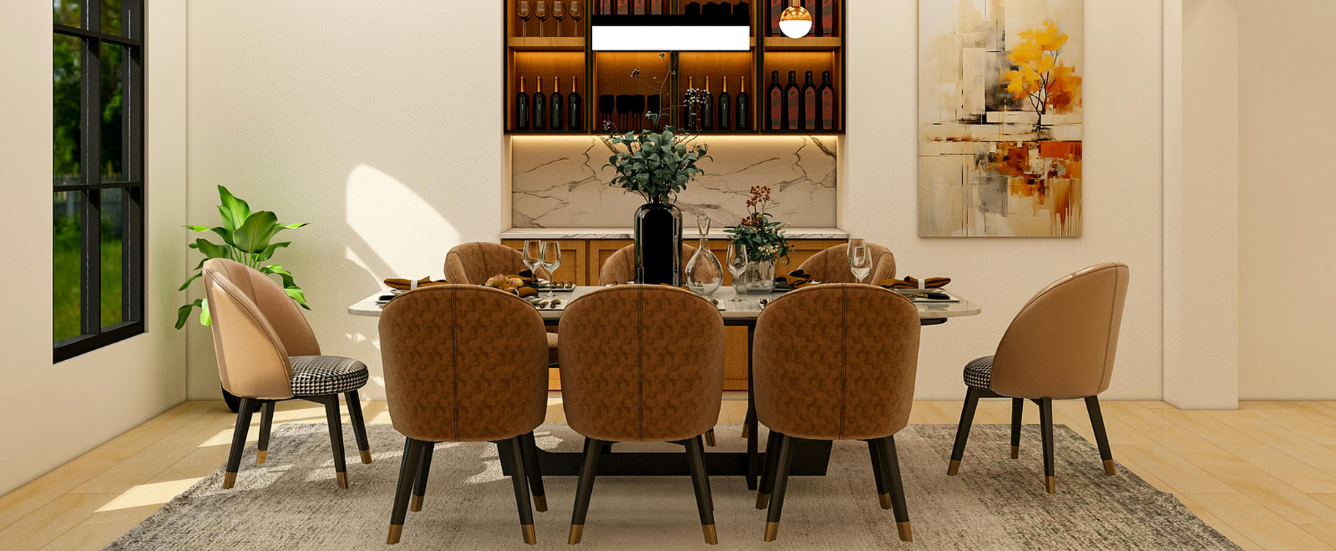
Now, let’s talk about the dining table. First of all, the dining table also serves as a place for family discussions. There should be less arguing and more appreciation here. Regarding table shapes, Square and rectangular tables generally represent stability.
Round tables encourage equality and openness because everyone sits at an equal distance from one another. However, it is considered better to avoid highly irregular designs or those with broken edges. And one more important point, there should be enough space around the dining table for people to move comfortably. That is also how energy circulates freely.
Common Mistakes Many People Make
Let’s discuss the common mistakes that many of us make unknowingly. The first mistake is turning the dining table into a permanent storage spot. Bills, medicines, laptops, school bags, and other random items often clutter the table. If the dining table remains cluttered, mealtime can subconsciously become stressful. Another common mistake is eating while watching TV; this means your attention is focused on neither the food nor your family. A third mistake is constant mobile phone usage. Notice how these days, a family might sit at the same table yet engage in no conversation. Vastu principles suggest that along with food, we also digest positive emotions; therefore, it is crucial to make mealtime a mindful experience.
Colors, Lighting, and Ambience
Now, let’s talk about the ambience. The dining area should not feel dark or gloomy. Natural light is considered ideal, and warm lighting helps create a welcoming atmosphere. Regarding colors, soothing shades—such as light earthy tones, cream, beige, soft yellow, or light green—generally foster a comfortable environment. Similarly, fresh flowers or a bowl of fresh fruit are seen as symbols of positivity and freshness, whereas artificial or decaying items should be avoided. Cleanliness is equally important, as there is a direct link between food, hygiene, and health.
The Most Important Vastu Rule
And now the most important thing. No matter how perfect the direction of your dining room is, how expensive the table is, or how beautiful the decorations are, if the family never sits together and eats, the true purpose of Vastu remains incomplete. If not every day, then at least a few meals a week are fine, but eat with your family without TV or mobile, just talking. Believe me, this improves not only relationships but also mental peace. Positive homes aren’t just made of walls; they’re made of positive conversations.
Closing
So, next time you assess your home’s Vastu, give equal importance to the dining space, not just the entrance, bedroom, or kitchen. Because a well-planned dining area not only organizes space but also plays an important role in the home’s overall balance. By understanding small Vastu principles and applying them practically, you can make your home even more balanced and harmonious.